
Ways to pay for the Philadelphia subway
Four ways to pay the same $2.90 fare: which one carries free transfers, where you tap, and which suits a visitor, a resident or someone paying for two
Four ways to pay, one price
Every ride on the metro costs $2.90, and you can pay it four different ways. The price is identical in all four, so choosing between them is not about money per ride — it is about transfers, about whether you want to carry anything, and about whether you are paying for more than one person.
Two of the four include up to 2 free transfers within 120 minutes. Two include none. That single difference is worth more than any other detail on this page: on a trip with one change it doubles the cost.
The four methods, described by what they are
Same fare, four mechanisms. The badge in each card is the thing to read.
Tap the card, phone or watch you already carry on the reader at the gate. Nothing to buy and nothing to top up.
$2.90 a ride
Carries transfers
The region's own plastic card, loaded with money and tapped at the gate. The card itself costs extra the first time.
$2.90 a ride
Carries transfers
Pay the cashier at the station booth. The exact single fare, with no transfer credit attached.
$2.90 a ride
No transfer credit
A one-trip ticket bought from the vending machine in the station. Useful if you are paying for someone else.
$2.90 a ride
No transfer credit
Which one suits you
The fare is the same, so pick by how you travel — and by whether you need the transfers.
| If this is you | What to use | Why |
|---|---|---|
| Here for a day or two | Contactless bank card or phone | Nothing to buy, nothing to top up, no card to get rid of at the end — and it carries the 120-minute transfers, which is what a day of sightseeing with one change actually needs. |
| Living here and riding most days | Reloadable stored-value transit card | The regional card is the one the local system is built around, it holds money rather than a bank link, and it carries the same free transfers. It costs extra the first time, for the card itself. |
| Paying for somebody else’s trip | Single-ride paper ticket from the kiosk | A single paper ticket from the machine can be handed to another person, which is the one thing a tap on your own phone cannot do. The trade-off is that it carries no transfer credit. |
| No card, no phone, no machine working | Cash at the booth | The booth takes cash for the exact single fare. It always works, and it is the most expensive option on any trip with a change, because there is no transfer credit attached. |
| Travelling as a group of four | One method each | There is no group product in the published fare data, so four people are four fares. If a group or family product exists it is not in the source, and this site does not invent one. |
The pattern behind that table: the two methods that carry transfers are the two the system can recognise again — a card or device it has seen before. Cash and a paper single are anonymous one-shot payments, and the transfer credit has nothing to attach itself to. If your trip involves a change of line or a connecting route, that is the whole decision.
Where you tap
On the way in, at the gate line. The counted gates below are the only ones the data publishes.
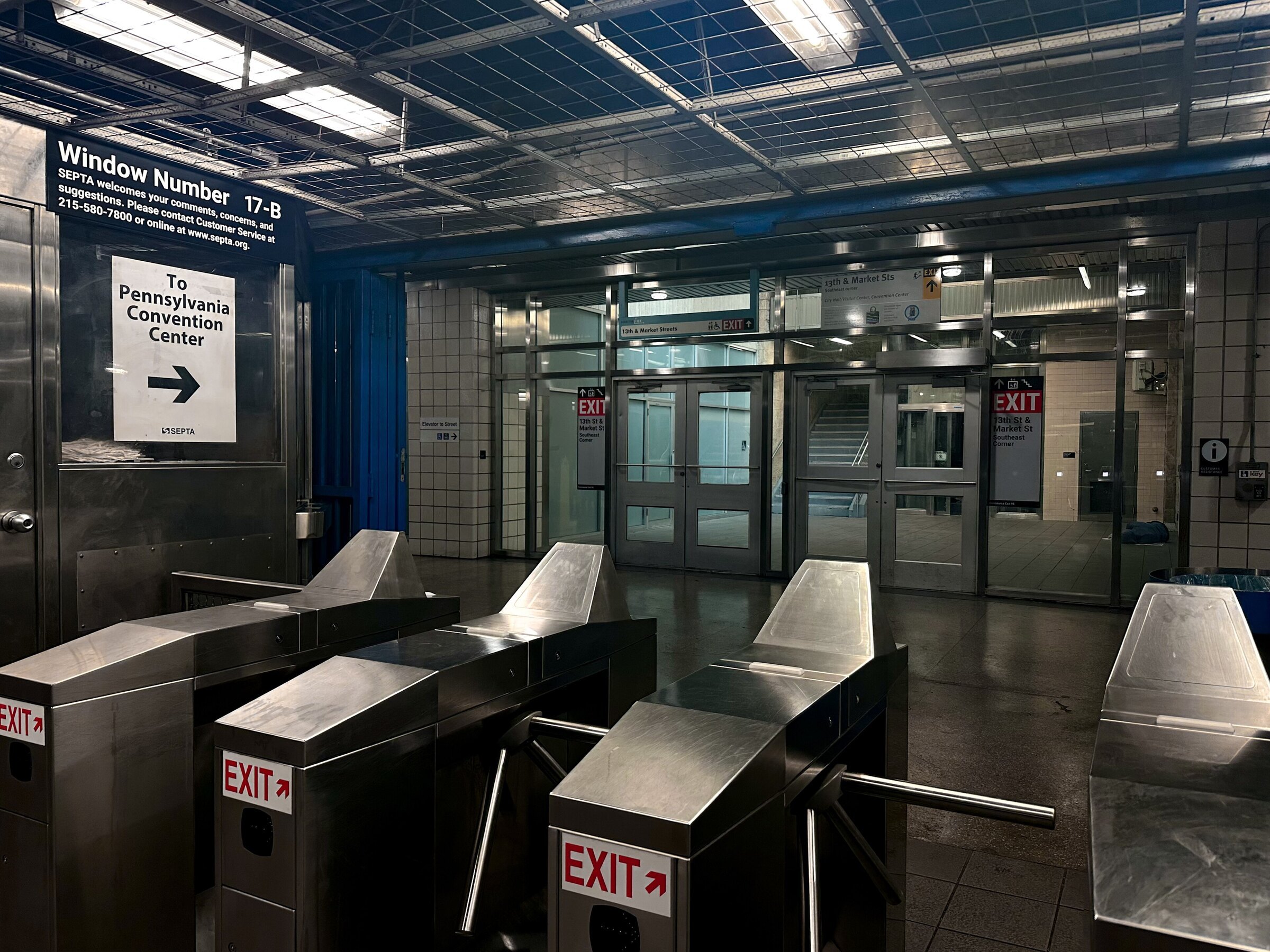
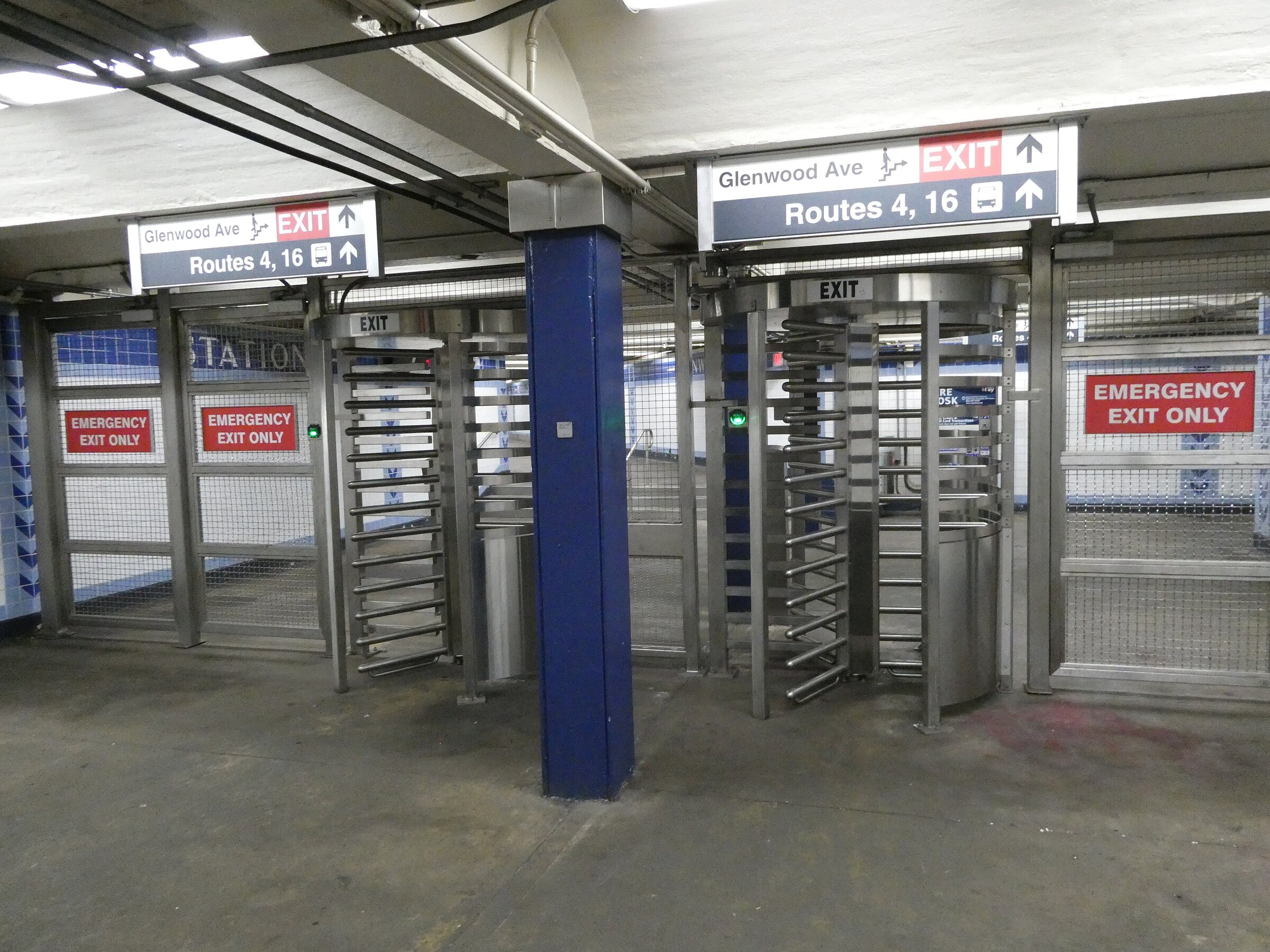
You pay on the way in, at the gate line between the concourse and the platforms. The fare is flat, so there is no distance to settle up on the way out and nothing for the system to work out from where you got off.
How many gates a station has is published for exactly 6 of the 70 stations — the six complexes whose insides the data describes. Across those six it declares 28 entry gates, and in 5 of the six it also declares separate exit-only gates, which is why the way out can feel nothing like the way in:
| Station complex | Entry gates | Exit-only gates | Street entrances |
|---|---|---|---|
| 15th St/City Hall B L | 14 | 10 | 10 |
| Drexel Station at 30th Street L | 7 | 0 | 5 |
| NRG Station B | 3 | 4 | 4 |
| Frankford Transit Center L | 2 | 7 | 11 |
| 69th Street Transit Center L M | 1 | 1 | 5 |
| Olney Transit Center B | 1 | 4 | 8 |
What is not published about paying
Four questions that arrive on this page every day and that the source does not answer. A plausible answer to any of them would be a guess with somebody else’s money.
| What the data does not give | Why there is no answer here |
|---|---|
| Whether a pass would be cheaper for your week | There are no pass products in the published fare data — only single rides. So this site cannot tell you the break-even point between tapping each time and buying a pass, and will not estimate one. |
| The reduced fare, and what proves you qualify | Neither the amount nor the eligibility rules are in the fare data. Both are worth asking about at a station booth if they apply to you. |
| Anything about paying on regional rail | Zone-priced, in a separate dataset, different mode. Not covered here, including the trip to the airport. |
| The maximum balance, how to check it, and where to buy a card in person | None of the three is anywhere in the data behind this site: not the ceiling on a stored-value card, not a documented way to read the balance, and not a list of shops or booths that sell the card. House rule here — what is not published is not filled in with something that sounds right. |
Frequently asked questions about paying
Yes. Tapping a contactless bank card, phone or watch at the gate is one of the four ways to pay, it costs the same $2.90, and it is one of the two that carry free transfers. There is nothing to buy and nothing to top up.
The two that the system can recognise again: the contactless card or device you already carry, and the reloadable regional transit card. Both give you up to 2 more rides free within 120 minutes. Cash at the booth and a single paper ticket carry none.
No. The fare is flat, so there is nothing to settle on the way out — and in 5 of the six stations the data describes from the inside, the way out is through separate exit-only gates. Pay on the way in and you are done.
That is exactly the case the data does not describe, so this page will not promise it. What it can tell you is that a single paper ticket from the machine can be handed to somebody else — at the cost of its transfer credit, which is none.
Not something the data behind this site publishes: there is no list of sales points in it, and inventing one would send somebody to the wrong place. The vending machines inside stations sell single tickets, and the booth takes cash.
Also not documented in the source. If you need to know the balance before you travel, ask at the booth rather than trust a figure from a site that is working from a schedule feed.
Not per ride: the fare is $2.90 either way, and both carry the same transfers. The difference is practical — the card costs something the first time and holds money instead of linking to a bank, which some people want and others do not.
If there is, it is not in the published fare data. For a day or two of riding, the method that needs no purchase at all — the contactless card or phone you already carry, with its free transfers — is the one with nothing to go wrong.